
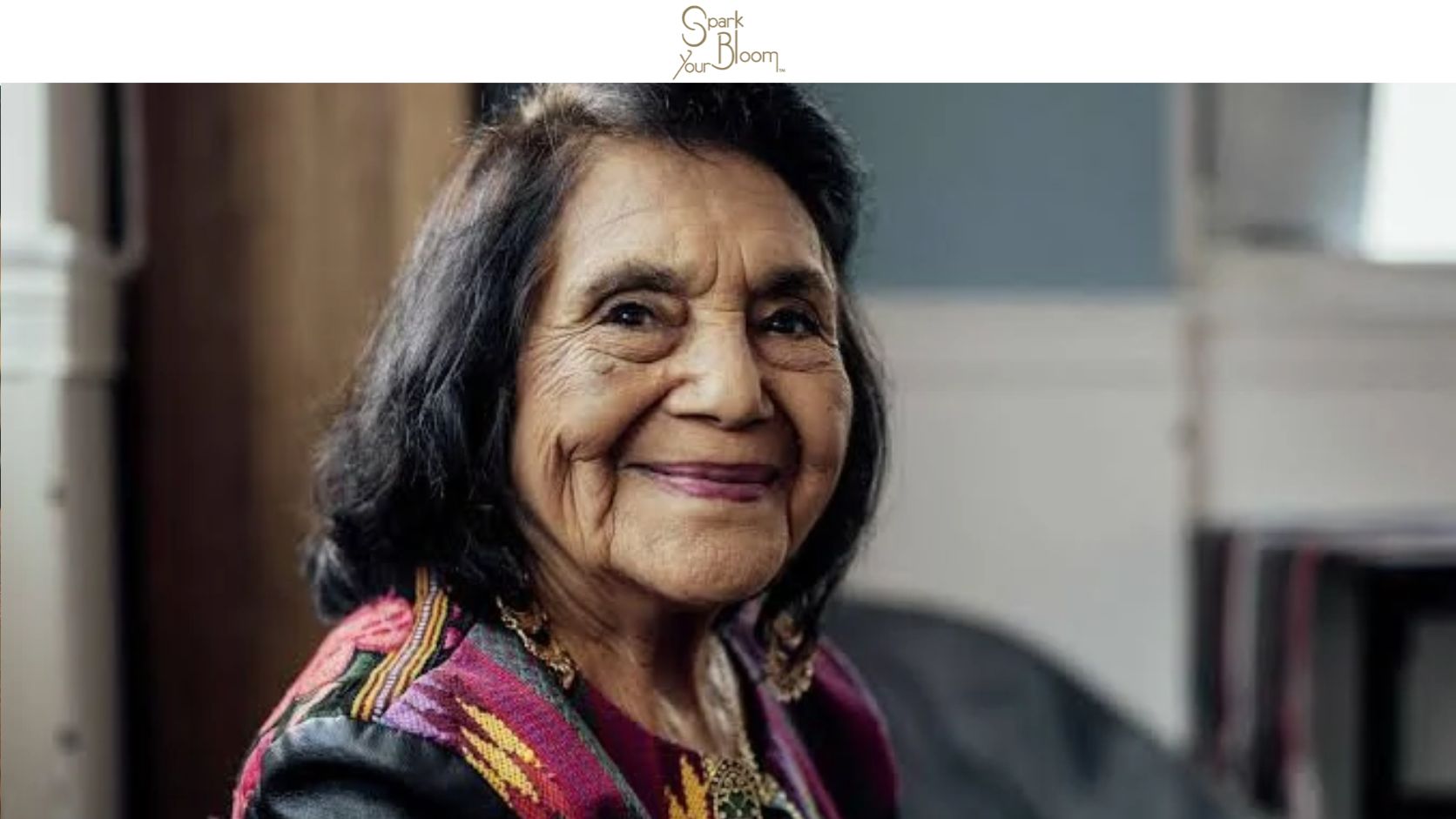
Dolores Huerta, the legendary American labor leader and civil rights activist, passed away on October 28, 2026, at the age of 96, bringing renewed attention to her remarkable life and family background. Born in Dawson, New Mexico, on April 10, 1930, Huerta was an American citizen by birth and proudly identified with her Mexican-American heritage. Her decades of activism helped transform labor protections, strengthen immigrant communities and establish her as one of the most influential women in American civil rights history.
Huerta became internationally recognized for co-founding the organization that eventually became the United Farm Workers. Although her activism frequently focused on Mexican-American and immigrant workers, she was born and raised in the United States. Her family had longstanding connections to the American Southwest, particularly New Mexico and California.
What Was Dolores Huerta’s Nationality?
Dolores Huerta was American.
She was born in Dawson, New Mexico, which was already part of the United States when she was born in 1930.
Her full birth name was Dolores Clara Fernández.
As someone born in the United States, Huerta held American citizenship from birth.
Her nationality was American, while her ethnic background was Mexican-American.
The distinction is important because her advocacy for Mexican-American communities sometimes led people to assume she was born in Mexico.
However, her family history was deeply connected to the southwestern United States.
Throughout her life, Huerta remained involved in American political, social and labor movements.
Where Was Dolores Huerta Born?
Dolores Huerta was born on April 10, 1930, in Dawson, New Mexico.
Dawson was a mining community where many working-class families lived during the early twentieth century.
Her father worked in physically demanding industries, including mining and agriculture.
The region had longstanding cultural and historical connections to Mexico.
New Mexico became a U.S. state in 1912, nearly two decades before Huerta’s birth.
Although she was born in New Mexico, Huerta spent much of her childhood in California.
Her family relocated to Stockton after her parents separated.
The move exposed her to the agricultural communities that would later become central to her activism.
Dolores Huerta’s Mexican-American Heritage
Dolores Huerta was American by nationality and Mexican-American by ethnicity. Her cultural background reflected generations of families living in the American Southwest, a region with deep historical connections to Mexican traditions, language and community life.
Her parents were Juan Fernández and Alicia Chávez.
Both came from New Mexico, where Mexican-American communities had established roots over many generations.
Huerta grew up understanding the importance of cultural identity and community responsibility.
Her heritage influenced her commitment to fighting discrimination and economic inequality.
She became particularly concerned about the treatment of agricultural workers, many of whom were Mexican-American or immigrants.
Her ability to connect with Spanish-speaking communities became an important part of her organizing work.
However, her activism extended beyond one ethnic group.
She consistently advocated for workers and families from different backgrounds.
Who Were Dolores Huerta’s Parents?
Dolores Huerta’s father was Juan Fernández, a farmworker, miner and labor activist.
He was born in Dawson, New Mexico.
His experiences in working-class occupations helped establish the family’s connection to labor issues.
Juan later became involved in politics and served in the New Mexico legislature.
Huerta’s mother, Alicia Chávez, was born in Las Cruces, New Mexico.
After separating from Juan, Alicia raised Dolores and her siblings in California.
She worked in several occupations before operating a hotel and restaurant.
Alicia was also known for helping people experiencing financial difficulties.
Her involvement in community activities influenced Dolores’s understanding of compassion and public responsibility.
Huerta later credited her mother with inspiring her commitment to helping disadvantaged communities.
Growing Up in Stockton, California
Dolores Huerta spent much of her childhood in Stockton, California.
The city was surrounded by agricultural areas where farmworkers played an essential role in the local economy.
Many families faced low wages, difficult working conditions and limited access to opportunities.
Growing up in this environment exposed Huerta to social inequalities.
She attended local schools and eventually pursued higher education.
Huerta studied at Stockton College, later known as San Joaquin Delta College.
She initially trained to become a teacher.
However, her experiences in the classroom changed her professional direction.
She became concerned about children arriving at school hungry or without adequate clothing.
Huerta concluded that improving the economic circumstances of their parents could make a greater difference.
That realization encouraged her to pursue community organizing.
How Dolores Huerta Became a Civil Rights Leader
Huerta began developing her organizing career during the 1950s.
She became involved with the Community Service Organization, which focused on voter registration and improving opportunities for Mexican-American communities.
Her work included encouraging political participation and addressing discrimination.
During this period, she met César Chávez, another prominent labor organizer.
They shared concerns about the conditions experienced by agricultural workers.
In 1962, the two helped establish the National Farm Workers Association.
The organization later merged with another agricultural labor group and became the United Farm Workers.
Huerta played an important role in organizing campaigns and negotiating labor agreements.
Her leadership helped bring national attention to the challenges facing farmworkers.
Her Role in the United Farm Workers
Dolores Huerta became one of the most influential organizers in the American farm labor movement.
She participated in campaigns demanding better wages, safer workplaces and improved treatment of agricultural workers.
Her work became particularly significant during the Delano grape strike and subsequent consumer boycotts.
These campaigns encouraged Americans to consider the working conditions behind the food they purchased.
Huerta also participated in negotiations between agricultural employers and labor representatives.
Her efforts contributed to agreements that improved conditions for many workers.
She supported legislation protecting agricultural employees and strengthening collective bargaining rights.
Her involvement in California’s Agricultural Labor Relations Act of 1975 became another important achievement.
Through these activities, Huerta established herself as a leading figure in American labor history.
The Meaning of Sí, Se Puede
Dolores Huerta is widely credited with creating the slogan “Sí, se puede.”
The Spanish phrase translates to “Yes, we can.”
She introduced the expression during the farmworkers movement in 1972.
It became a powerful message of determination and collective action.
The slogan reflected the movement’s strong connections to Mexican-American and Spanish-speaking communities.
However, its meaning extended beyond language and ethnicity.
It encouraged people from different backgrounds to believe that organizing together could produce meaningful change.
Over time, the expression became associated with broader civil rights and political campaigns.
It remains one of Huerta’s most recognizable contributions to American activism.
Dolores Huerta’s National Recognition
Dolores Huerta received numerous honors throughout her career.
In 1993, she became the first Latina inducted into the National Women’s Hall of Fame.
She later received the Eleanor Roosevelt Human Rights Award in 1998.
One of her most significant national honors came in 2012.
President Barack Obama awarded her the Presidential Medal of Freedom.
The recognition celebrated her contributions to labor rights, civil rights and community organizing.
Huerta also established the Dolores Huerta Foundation in 2003.
The organization focused on encouraging civic participation and developing community leaders.
Its activities included voter engagement, education and advocacy for underserved communities.
These achievements demonstrated her lasting influence on American public life.
Dolores Huerta’s Passing and Public Tributes
Dolores Huerta passed away on October 28, 2026, at her home in Bakersfield, California.
She was 96 years old.
Her family confirmed the news and requested privacy during their period of mourning.
Her passing prompted tributes from political leaders, labor organizations and civil rights advocates.
Many remembered her determination to improve the lives of working families.
Her contributions were especially significant for agricultural workers who historically lacked adequate workplace protections.
New Mexico Governor Michelle Lujan Grisham also honored Huerta’s connection to her birthplace.
The state had previously designated April 10 as Dolores Huerta Day in recognition of her achievements.
Her passing marked the end of an extraordinary chapter in American labor and civil rights history.
Dolores Huerta’s American Legacy
Dolores Huerta’s nationality was American, and her Mexican-American heritage remained an important part of her identity.
Born in New Mexico and raised in California, she dedicated her life to improving conditions for workers and marginalized communities throughout the United States.
Her achievements extended from agricultural labor organizing to women’s rights, education and political participation.
She helped establish the United Farm Workers, contributed to important labor reforms and inspired generations of community activists.
Her famous message, Sí, se puede, continues to symbolize determination and collective action.
Although Huerta is remembered as a prominent Mexican-American leader, her contributions form an important part of the broader history of American civil rights.