
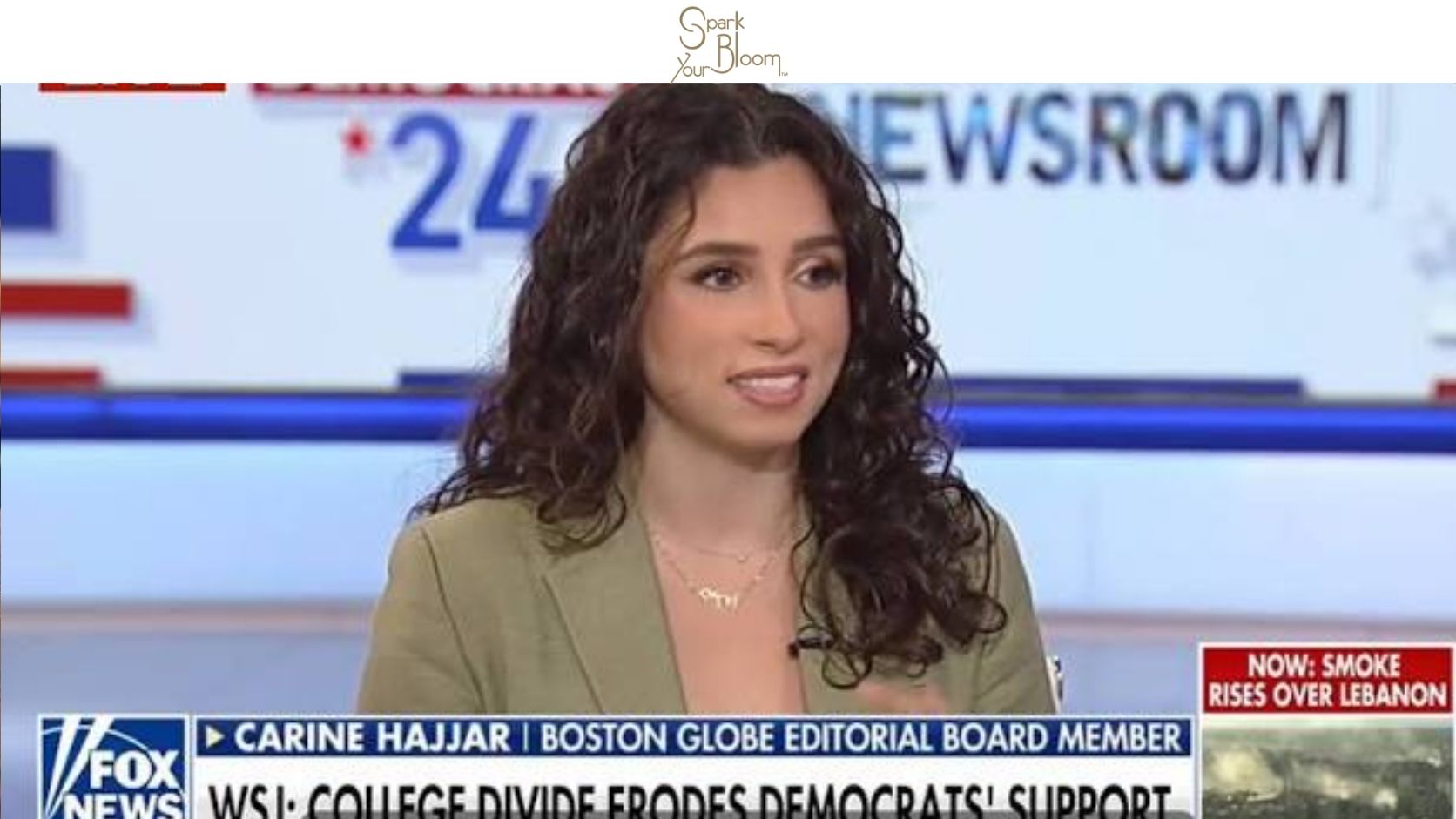
Carine Hajjar has Lebanese family heritage and an American upbringing. In a July 2026 interview, the journalist said she was born in Boston, described her mother as Venezuelan-Lebanese and explained that her father’s grandparents came from Lebanon. Her own account is the strongest basis for describing her background, rather than assumptions drawn from her surname, appearance or political commentary.
What Is Carine Hajjar’s Ethnic Background?
Lebanese heritage is the family background Hajjar has directly described. Her account includes connections through both sides of the family, although those connections are not identical in generation or geography.
She described a family that considered itself American while remaining close to Lebanese culture. That makes Lebanese-American a useful broad description of the background she discussed.
It should not be converted into a precise ancestry percentage or an assertion that every grandparent shared the same nationality. Her own explanation is more specific than that kind of shorthand.
What Did She Say About Her Mother?
During the July 1, 2026 episode of The Iran Breakdown, Hajjar described her mother as Venezuelan-Lebanese.
That description adds an important diaspora connection to the family story. It shows why a simple choice between American and Lebanese would leave out part of the background she identified.
However, the statement does not establish her mother’s full immigration history, exact birthplace or current citizenship. Those details would require additional information rather than an assumption based on the two-part description.
What Did She Say About Her Father’s Family?
Hajjar explained that her father’s grandparents were from Lebanon. That is a specific generational connection and should be preserved accurately.
It would be a mistake to rewrite the statement as though her father himself had necessarily been born in Lebanon. A family origin and an individual birthplace are different facts.
The reviewed material did not establish the names of every ancestor or a complete family tree. Those gaps do not weaken her direct acknowledgment of Lebanese roots.
Where Did Carine Hajjar Grow Up?
Hajjar said she was born in Boston. Institutional profiles identify Milton, Massachusetts, as her hometown and the place where she grew up.
These descriptions are compatible: a person can be born in Boston and raised in a nearby Massachusetts community. They should not be treated as contradictory accounts of her identity.
Her American upbringing is also documented through her education and early career. It is separate from the family heritage she has discussed in interviews.
Has She Discussed Cultural or Religious Traditions?
Yes. In the same interview, Hajjar said she grew up close to Lebanese culture and described family connections with Melkite and Maronite Christian churches in the Boston-area diaspora.
That is a direct public disclosure, rather than a religious identity inferred from her name. It provides context for the cultural environment she described.
Religion, ethnicity and citizenship are still different categories. A church tradition should not be treated as proof of a particular political position or a complete account of someone’s ancestry.
How Does Her Background Relate to Her Journalism?
Hajjar has written and spoken about Lebanon, foreign policy, immigration and American politics. Her July interview connected a personal interest in Lebanon with her later work examining its political circumstances.
That connection can be acknowledged without reducing her arguments to ancestry. A journalist’s family background may explain an interest, but readers still need to evaluate the substance and evidence of the work.
It would also be inappropriate to assume that her views represent every Lebanese-American person or every member of the communities she described.
What Is Her Educational Background?
Hajjar graduated from Harvard College in 2021. Institutional accounts describe studies in government and economics and her involvement in student journalism and public-affairs activities.
Before college, she attended Ursuline Academy in Dedham, according to the Fund for American Studies. These are documented parts of her Massachusetts upbringing.
Her education does not establish ethnicity by itself. It supplies the professional and geographic context around the family identity she has separately explained.
Where Has She Worked?
Her career includes work associated with The Wall Street Journal, The Boston Globe and The Washington Post. Current institutional profiles identify her as a Washington Post opinion journalist.
She received the Joseph Rago Memorial Fellowship in 2022 and a Robert Novak Journalism Fellowship for 2024–25. The latter supported a reporting project connected with Lebanon.
Those appointments provide a documented career timeline. They should not be replaced with claims about an unnamed employer or a similarly named person in another country.
What Is the Recent Update?
Her July 2026 podcast appearance is particularly relevant because it contains her own explanation of her background. A 2026 University of Colorado speaker profile also documents her continuing work in journalism and public commentary.
No new event changes the basic account of her heritage. Recent professional activity is a career update, rather than evidence that her ethnicity or family origins have changed.
The clearest description remains an American journalist with Lebanese roots, including a Venezuelan-Lebanese maternal connection and Lebanese ancestry through her father’s grandparents, as she publicly explained herself.
Harvard’s athletics archive also lists Hajjar on its women’s rugby roster, identifying Milton as her hometown and documenting another part of her university experience.